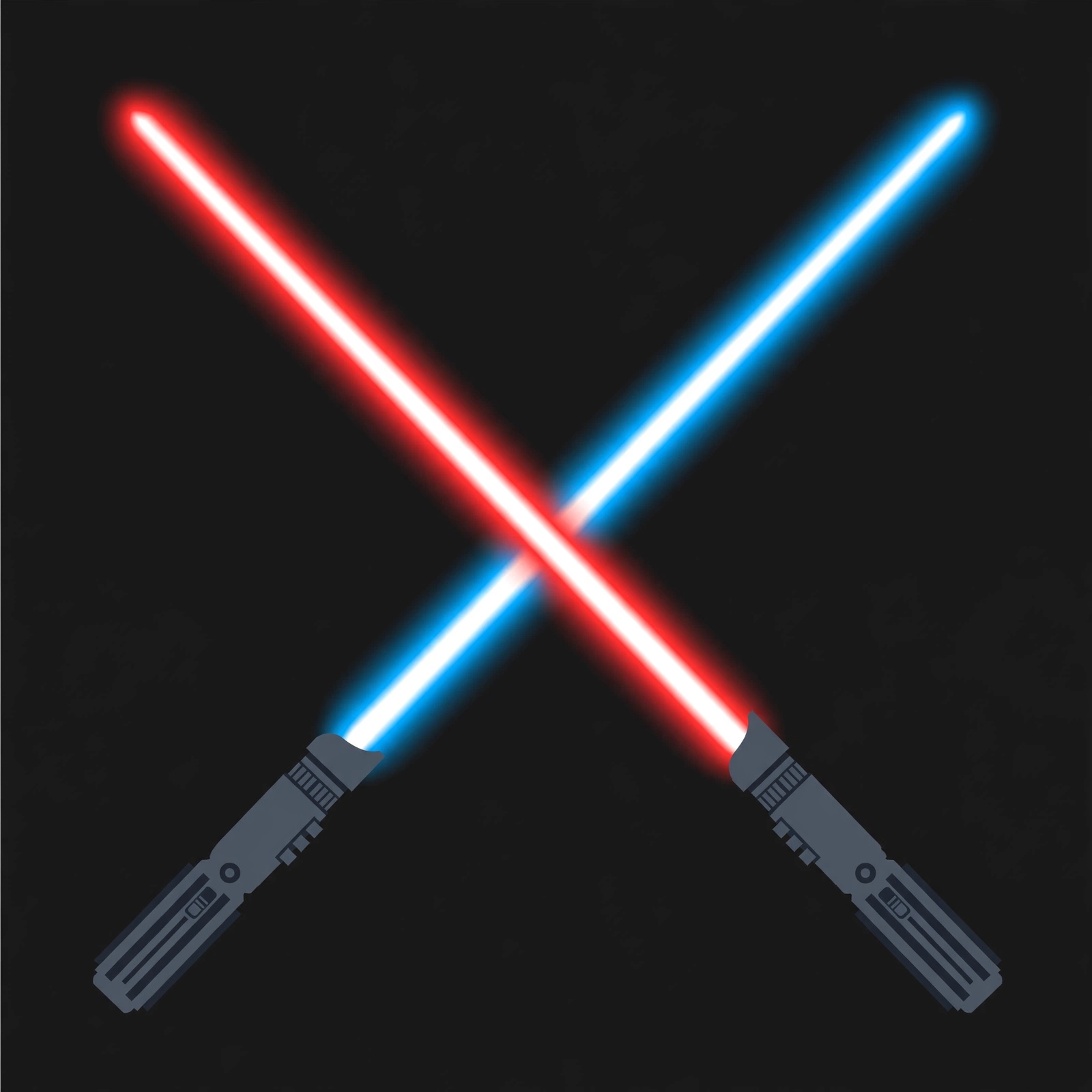
Three electronics paths, three very different ownership experiences.
Short answer: choose baselit for hard dueling and low replacement cost, Xenopixel for cinematic pixel effects without a steep learning curve, and Proffie if maximum customization matters more than convenience.
The three choices solve different problems
These names are often treated as three versions of the same thing, but that is not quite right. Baselit describes how the blade is illuminated: a high-power light-emitting diode (LED) in the hilt shines into a hollow blade. Xenopixel and Proffie are control platforms commonly paired with addressable pixel blades, where LEDs run through the blade itself.
That distinction explains nearly every tradeoff. Baselit protects the expensive electronics inside the hilt. Pixel systems put individually controlled LEDs in the blade, unlocking scrolling ignition, localized clash effects, tip drag, unstable effects, and richer animations — but also making the blade costlier and more vulnerable to hard impacts.
Decide in 30 seconds
| Core | Best for | Big advantage | Main tradeoff |
|---|---|---|---|
| Baselit | Hard dueling | Durable, cheaper blade | Simpler visuals |
| Xenopixel | Most newcomers | Pixel effects, app control | Less flexible than Proffie |
| Proffie | Tinkerers, builders | Deepest customization | Steeper learning curve |
If you are still unsure, Xenopixel is the safest all-around choice. It offers the visual payoff most buyers expect from a premium saber while keeping routine changes approachable.
Baselit is the practical dueling pick
A baselit saber puts the light source in the hilt, leaving the blade comparatively simple.
A baselit saber uses an LED module in the emitter and a hollow polycarbonate blade that carries and diffuses the light. Because the blade does not contain a long strip of electronics, it is generally the sensible platform for frequent or heavy-contact dueling.
- Why buy it: lower entry cost, lighter and cheaper replacement blades, fewer electronics in the impact zone, and straightforward maintenance.
- What you give up: the blade usually appears brightest near the emitter and cannot create true pixel-by-pixel effects such as a scrolling ignition or a localized blaster bolt.
- Who should choose it: dueling clubs, training partners, younger users under appropriate supervision, and anyone who would rather replace an inexpensive blade than worry about damaging an LED strip.
Baselit does not automatically mean “no features.” The soundboard can still provide smooth swing, flash-on-clash, sound fonts, color changes, gesture controls, and other effects. The limiting factor is the single light source, not necessarily the board controlling it.
Xenopixel is the sweet spot for most first-time pixel buyers
Xenopixel pairs approachable controls with a bright, addressable pixel blade.
Xenopixel is designed to make the pixel-blade experience accessible. Current Xeno3 configurations commonly provide smooth swing, multiple sound fonts, gesture controls, several blade and ignition modes, and effects such as lockup, blaster deflection, melt, stab, and tip drag. Bluetooth app support and a microSD card can make common adjustments easier than a traditional compile-and-upload workflow.
- Why buy it: you get the bright, even illumination and animated effects people associate with a modern pixel saber, plus convenient preset and app-based controls.
- What you give up: you can customize a great deal, but you do not get the same open-ended control over code, blade logic, and unusual hardware that Proffie offers.
- Who should choose it: first-time pixel buyers, cosplayers, collectors, and users who want to change fonts and effects without turning each update into a software project.
Xenopixel is not a single promise about every saber. Sellers choose batteries, speakers, blade thicknesses, included fonts, and firmware versions. Compare the actual configuration — not just the word “Xenopixel” — before buying.
Proffie rewards owners who want total control
ProffieBoard hardware runs the open-source ProffieOS platform.
Proffie is the enthusiast option. ProffieOS is open source and supports addressable LED strips, high-power LED stars, smooth-swing sound, layered effects, multiple blades, accent LEDs, and elaborate blade styles. The result can be as simple or as unusual as the owner is willing to configure.
- Why buy it: maximum control over blade styles, ignition and retraction behavior, responsive effects, sound playback, buttons, gestures, accents, and specialized builds.
- What you give up: the learning curve is real. Depending on the installation and workflow, changing configurations may involve files, USB, browser tools or the Arduino development environment, and troubleshooting details that plug-and-play owners never see.
- Who should choose it: builders, hobbyists, and owners who actively enjoy tuning their saber — and anyone with a specific effect that a preset-driven board cannot reproduce.
A preconfigured Proffie saber can work perfectly well out of the box. The difference appears when you want to change it. If “I can make it do almost anything” sounds exciting, Proffie is the draw. If it sounds like maintenance, choose Xenopixel.
Pixel blades change the durability equation
Xenopixel versus Proffie is mostly a question of control and customization. Baselit versus pixel is a question of blade construction. Keeping those two decisions separate prevents a common buying mistake.
| Question | Baselit blade | Pixel blade |
|---|---|---|
| Light source | In the hilt | Inside the blade |
| Animated ignition | No true scrolling | Yes |
| Impact tolerance | Better for hard use | Better for controlled use |
| Replacement cost | Usually lower | Usually higher |
| Brightness pattern | Strongest near emitter | Even along blade |
Some vendors sell “duel-ready” pixel blades, and blade wall thickness varies. That does not erase the basic risk: a pixel blade still contains LED strips and wiring from base to tip. For repeated hard contact, baselit remains the lower-risk choice. For choreography, cosplay, display, and controlled light-to-medium contact, a well-made pixel blade can be appropriate — follow the maker’s warranty and use guidance.
The best core depends on how you will use it
Choose baselit if durability comes first
Pick baselit when the saber will be struck often, shared, trained with hard, or treated as sporting equipment. It is also the best budget route into a full-size illuminated saber.
Choose Xenopixel if you want the movie effect without the homework
For most buyers, this is the balance point: smooth sound, bright pixel illumination, animated effects, and meaningful customization in a package that is comparatively easy to live with.
Choose Proffie if customization is part of the hobby
Choose Proffie when creating, editing, testing, and refining the saber is part of the appeal. Its value is not that every owner needs every feature; it is that the platform places fewer limits on what a determined owner or installer can build.
Our default recommendation: Start with Xenopixel unless you already know you need a hard-dueling baselit blade or you specifically want Proffie’s open-source customization. It is the least likely choice to feel either underpowered or unnecessarily complicated.
Frequently asked questions
Can you duel with Xenopixel or Proffie?
Yes, within the limits of the particular blade and manufacturer guidance. Because most Xenopixel and Proffie sabers use pixel blades, repeated heavy hits create more risk than with a hollow baselit blade. Use baselit for routine heavy contact.
Is Proffie brighter than Xenopixel?
Not automatically. When both drive comparable pixel blades at comparable settings, blade construction, LED density, power delivery, diffusion, and battery condition matter more than the board name.
Does Proffie require coding?
You do not need to write software to operate a preconfigured saber. Meaningful changes can require learning configuration tools and an upload workflow, while advanced custom work can become code-like.
Can Xenopixel use custom sound fonts?
Many current Xeno3 installations support programmable sound fonts through a microSD card, but file structure and compatibility depend on the firmware and vendor configuration. Check the seller’s manual before buying a font.
Which blade is cheapest to replace?
A hollow baselit blade is generally cheaper because it does not contain LED strips, wiring, and a blade-side connector.
Which one should a beginner buy?
Xenopixel is the best general recommendation for a beginner who wants premium visuals. A beginner focused on contact dueling should choose baselit; a beginner who enjoys electronics and configuration can start with Proffie.
Sources and further reading
- ProffieOS project and feature overview: https://github.com/profezzorn/ProffieOS
- ProffieBoard v3.9 technical guide: https://www.artekit.eu/doc/guides/proffieboard-v3-9/
- Xeno3 user manual: https://cdn.shopify.com/s/files/1/0914/2340/8513/files/Manual_V3.0_3.pdf?v=1762467817
- Baselit and pixel blade construction comparison: https://neosabers.com/blogs/news/neopixel-lightsaber-vs-rgb-baselit-lightsaber
Editorial note: Features vary by saber maker, firmware version, installer, blade, speaker, battery, and warranty. Confirm the exact product specification before purchase.
Ready to find your saber?
Browse quality lightsabers with fast support at our store.